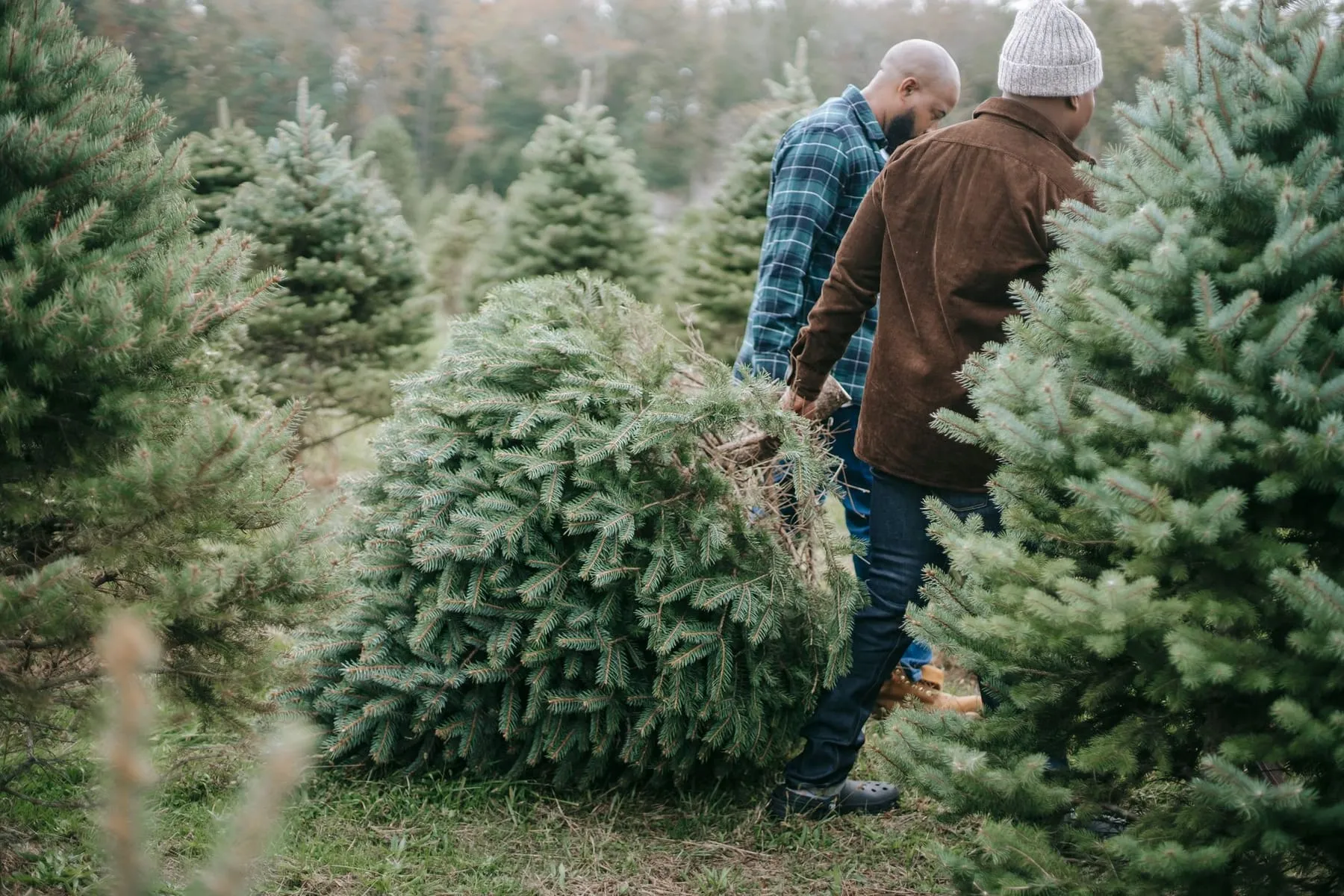
The traditional date to take your Christmas tree down in the UK is Twelfth Night, at the end of the twelve days of Christmas. That is either 5 or 6 January, and most people use whichever suits their week.
There is no law or official rule, so the date is really a matter of tradition and practicality. If you have a real tree, the timing usually takes care of itself. By the first week of January a cut tree has done its job, and Twelfth Night lines up neatly with council collections and garden waste schemes.
What date is Twelfth Night?
Twelfth Night is 5 or 6 January, depending on how you count. If Christmas Day is the first day of Christmas, the twelfth day is 5 January and Twelfth Night is that evening. If you start counting on Boxing Day, you land on 6 January.
The Church of England traditionally treats the evening of 5 January as Twelfth Night, with Epiphany on 6 January. Many households, though, simply think of 6 January as the day the decorations come down. Neither is wrong.
For the 2026 to 2027 season:
- Tuesday 5 January 2027: Twelfth Night by the Christmas Day count
- Wednesday 6 January 2027: Epiphany, and Twelfth Night by the Boxing Day count
- Saturday 9 and Sunday 10 January 2027: the first weekend after, when many families actually do the job

Why do people take decorations down on Twelfth Night?
Taking decorations down on Twelfth Night marks the end of the Christmas season. For centuries the twelve days from Christmas to Epiphany were a time of feasting and holiday, and Twelfth Night was the last big celebration before ordinary life began again.
Twelfth Night had customs of its own. Households baked a Twelfth cake with a bean or pea hidden inside, and whoever found it was crowned king or queen of the evening. Wassailing, singing to apple trees and toasting the coming harvest, also took place around this time in parts of England. Clearing away the greenery was a natural way to close the festivities and get the house ready for the working year.
Over time a superstition grew that leaving decorations up after Twelfth Night brings bad luck for the year ahead. Historians generally regard that as a fairly modern belief rather than an ancient rule. We look at where it came from in is it bad luck to take your Christmas tree down early.

Can you leave your Christmas tree up until Candlemas?
Some people do, following an older tradition. Candlemas falls on 2 February, 40 days after Christmas, and in medieval England it was often treated as the true end of the Christmas season. Greenery such as holly, ivy and bay was traditionally kept up until then.
With an artificial tree, nothing stops you. With a real cut tree, it is rarely practical. Most cut trees look good for roughly four to five weeks indoors, so a tree bought in early December will usually be past its best by the end of January, dropping needles and drying out. A dry tree near lights and heaters is also more of a fire risk.
If you love the idea of keeping something green until Candlemas, a potted tree moved outside after Twelfth Night, or a sprig of holly on the mantelpiece, is a gentler way to do it. Our guide to how long a real Christmas tree lasts explains what to expect from each variety.

When is the best time to take down a real tree?
For a real tree, the best time is usually the first week of January, before needle drop gets heavy and in time for your council’s collection. Look at the tree as much as the calendar.
Signs it is time to take it down, whatever the date:
- Needles fall in showers when you brush past
- Branch tips feel brittle or snap rather than bend
- The tree has stopped drinking, so the water level in the stand no longer drops
- The colour has dulled from glossy green to grey or yellowish
A tree that is still drinking well can stay up quite happily until Twelfth Night. Good care earlier in the season makes a big difference here, so it is worth reading how to keep a Christmas tree alive before you buy.
How do you take a real Christmas tree down without the mess?
Take the decorations and lights off first, then deal with the tree while it is still standing. Working from the top down makes it easier to reach everything and spot hidden hooks.
A simple routine:
- Remove lights and ornaments, and coil the lights around a piece of card so they are ready for next year.
- Siphon or sponge most of the water out of the stand so it does not spill when you move the tree.
- Lay an old sheet or a tree removal bag around the base, then lift the tree out and wrap it.
- Carry it out trunk first, so the branches fold back rather than catch on door frames.
- Vacuum with a hose nozzle, as needles can jam a brush bar.
What should you do with the tree afterwards?
Most UK councils collect real Christmas trees or set up drop-off points in early January, and the trees are usually chipped and turned into compost or mulch. Collection dates vary by area, so check your council’s website before Christmas, and remember that trees usually need to have all decorations, tinsel and stands removed.
Other good options include cutting the tree up for your garden waste bin, using the branches as winter mulch over flower beds, or donating it to a charity collection where these run locally. There are more ideas in our guide on what to do with your Christmas tree after Christmas.
If you want to plan your next season around those dates, read when to put up your Christmas tree, and when the time comes you can find a tree farm near you for a fresh tree that will last right through to Twelfth Night.
Questions people ask
Is Twelfth Night 5 or 6 January?
It depends on whether you count Christmas Day as the first of the twelve days. Counting from Christmas Day gives the evening of 5 January, while counting from Boxing Day gives 6 January. Both are widely used.
Can I take my Christmas tree down on New Year's Day?
Yes. There is no rule against it, and plenty of people clear up on 1 January or the first weekend of the new year, especially if their tree is starting to drop needles.
When do councils collect Christmas trees?
Many UK councils collect real trees or open drop-off points during the first two or three weeks of January. Dates and methods vary by area, so check your council's website in late December.
How do I stop needles going everywhere when I take the tree down?
Lay an old sheet or a tree removal bag around the base before you move it, then wrap the tree and carry it out trunk first. Vacuum with a nozzle rather than a brush head, as needles can clog brushes.
Do people in other countries take their trees down on different dates?
Yes. In some countries the tree stays up until Epiphany or later, and in Orthodox traditions Christmas falls on 7 January, so decorations often stay up well into the month.