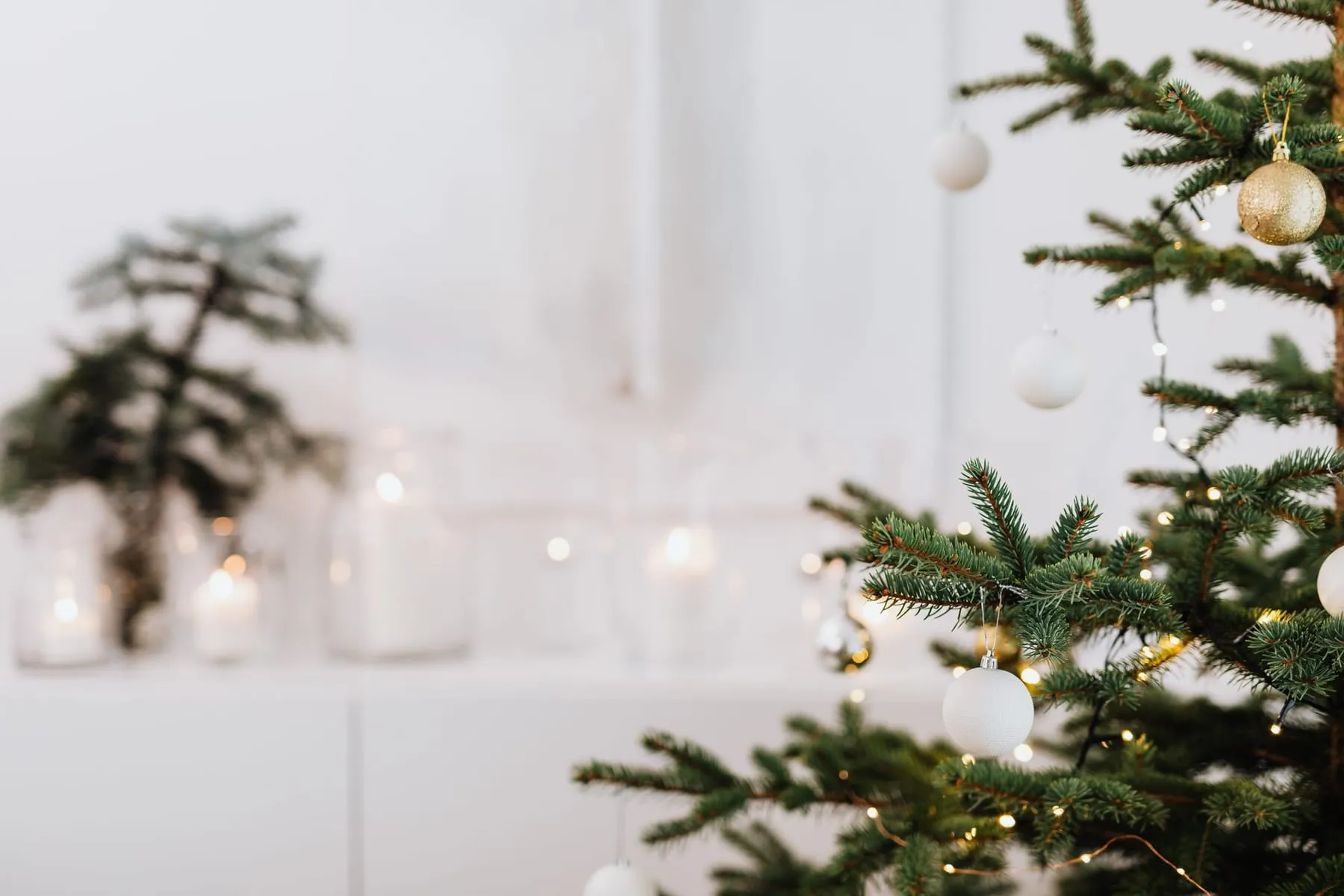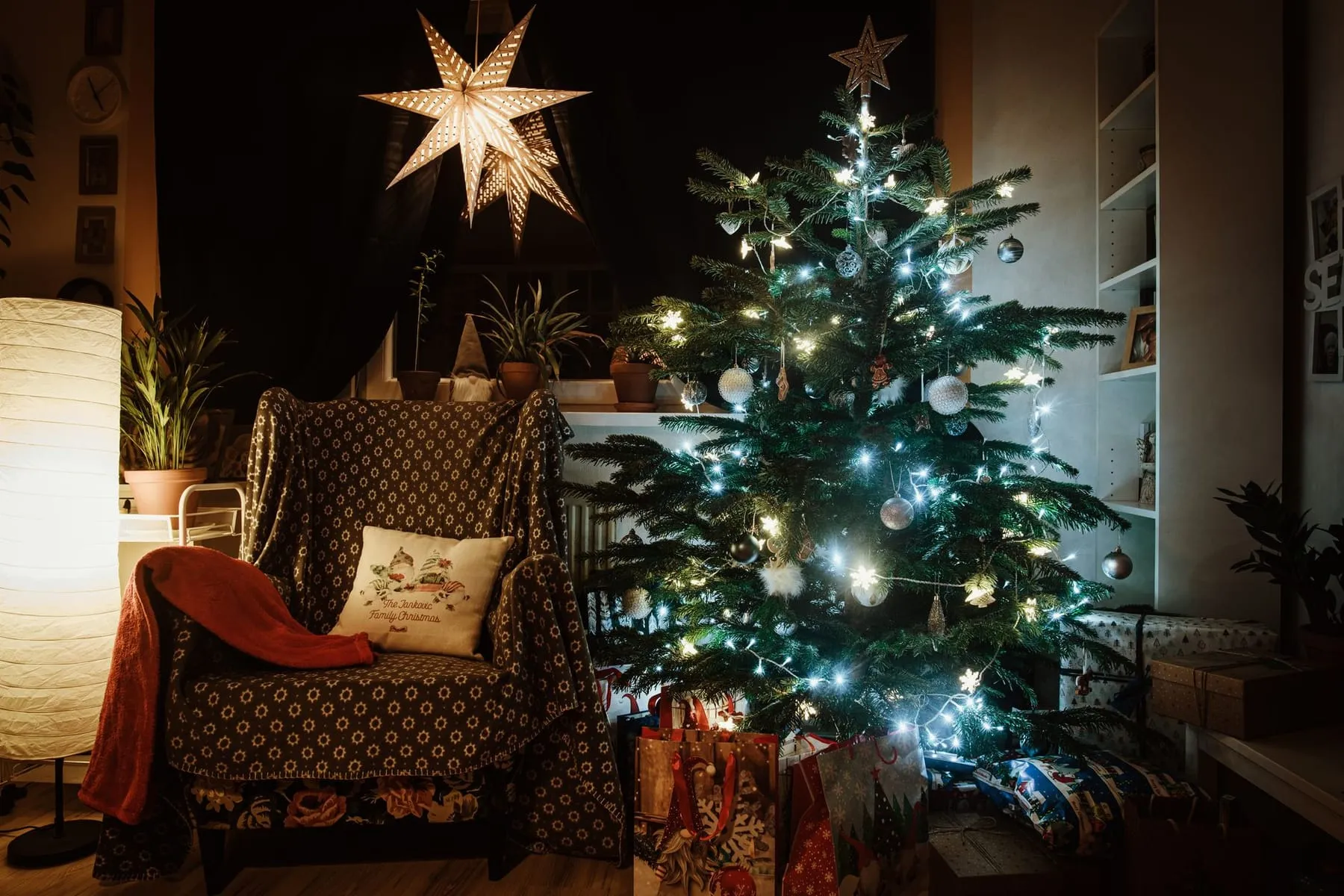
A real Christmas tree will usually last four to five weeks indoors, and often longer, if you buy it fresh and keep it watered. The type of tree, how recently it was cut, and how warm your house is all make a bigger difference than most people expect.
The good news is that almost everything that shortens a tree’s life is in your control. Pick the right variety, get it into water quickly and keep it away from heat, and a tree bought at the start of December should still look good on Twelfth Night.
How long does a real Christmas tree last indoors?
A healthy cut tree typically lasts around four to five weeks indoors with good care. That covers most of December and into early January, which is why so many families put their tree up in the first weekend of December.
Without care, the picture changes quickly. A tree that is left without water, or one standing next to a radiator, can start to dry out within a week, with needles that drop at the slightest touch and branches that droop.
A cut tree is still very much alive when it comes into your home. It keeps drawing water up through the trunk and losing it through its needles, so the whole game is keeping that supply going. Our guide on how to keep a Christmas tree alive covers the daily routine in detail.
Which Christmas trees last the longest?
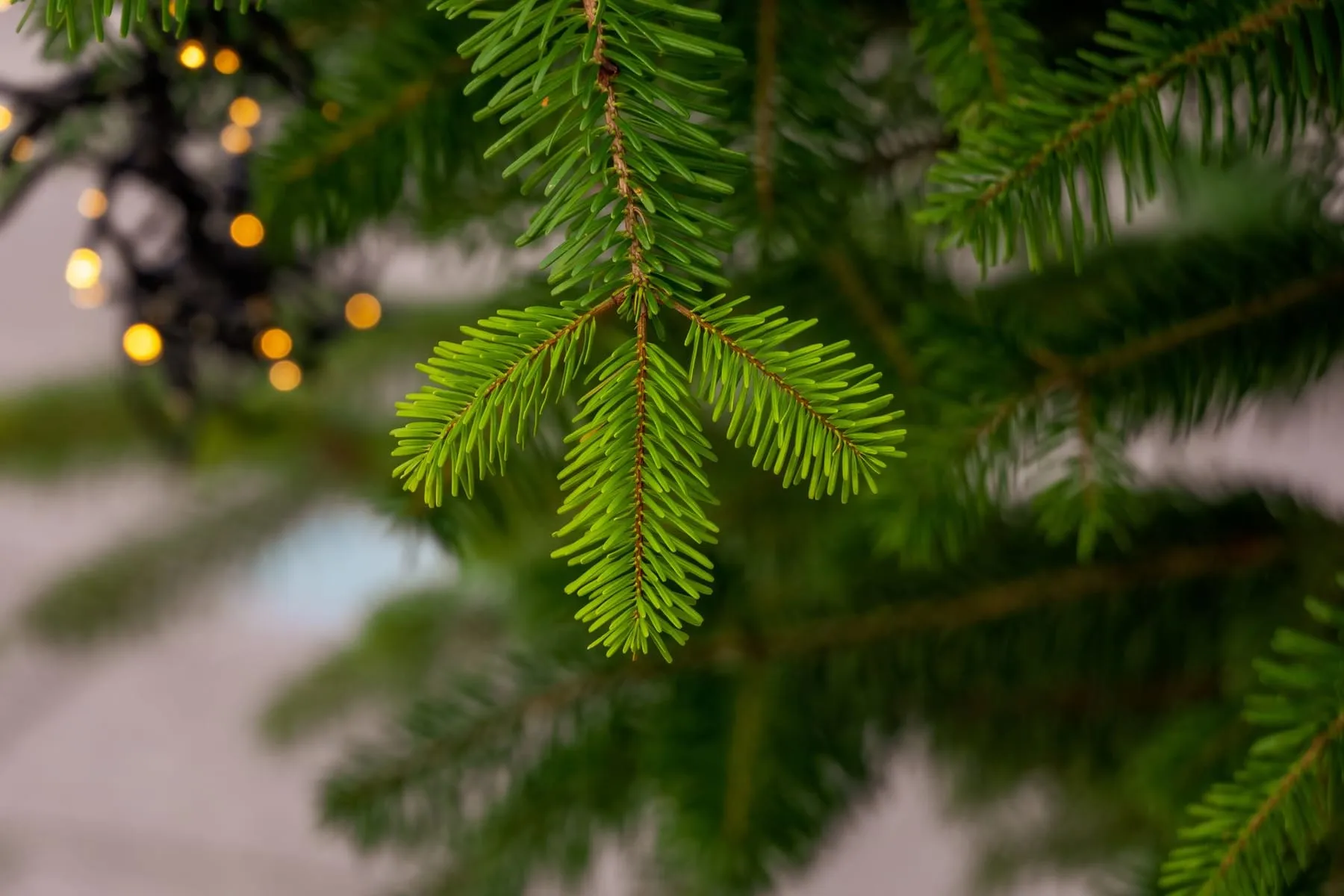
Nordmann fir is the longest lasting of the common UK Christmas trees, and it is the reason it has become the nation’s favourite. Fraser fir and Noble fir also hold their needles well. Norway spruce, the traditional British tree, smells wonderful but tends to drop needles sooner.
| Tree | Typical life indoors with good care | Needle hold |
|---|---|---|
| Nordmann fir | 4 to 6 weeks | Excellent |
| Fraser fir | 4 to 5 weeks | Very good |
| Noble fir | 4 to 5 weeks | Very good |
| Blue spruce | 3 to 4 weeks | Fair (sharp needles) |
| Norway spruce | 2 to 3 weeks | Poor once it dries |
These are rough guides rather than guarantees. A spruce bought fresh from a farm and kept cool can outlast a fir that sat in a car park for a fortnight before you bought it. If needle drop is your main worry, see our guide to Christmas trees that don’t drop needles, or read up on which trees are used as Christmas trees to understand the differences.
Why freshness matters more than variety
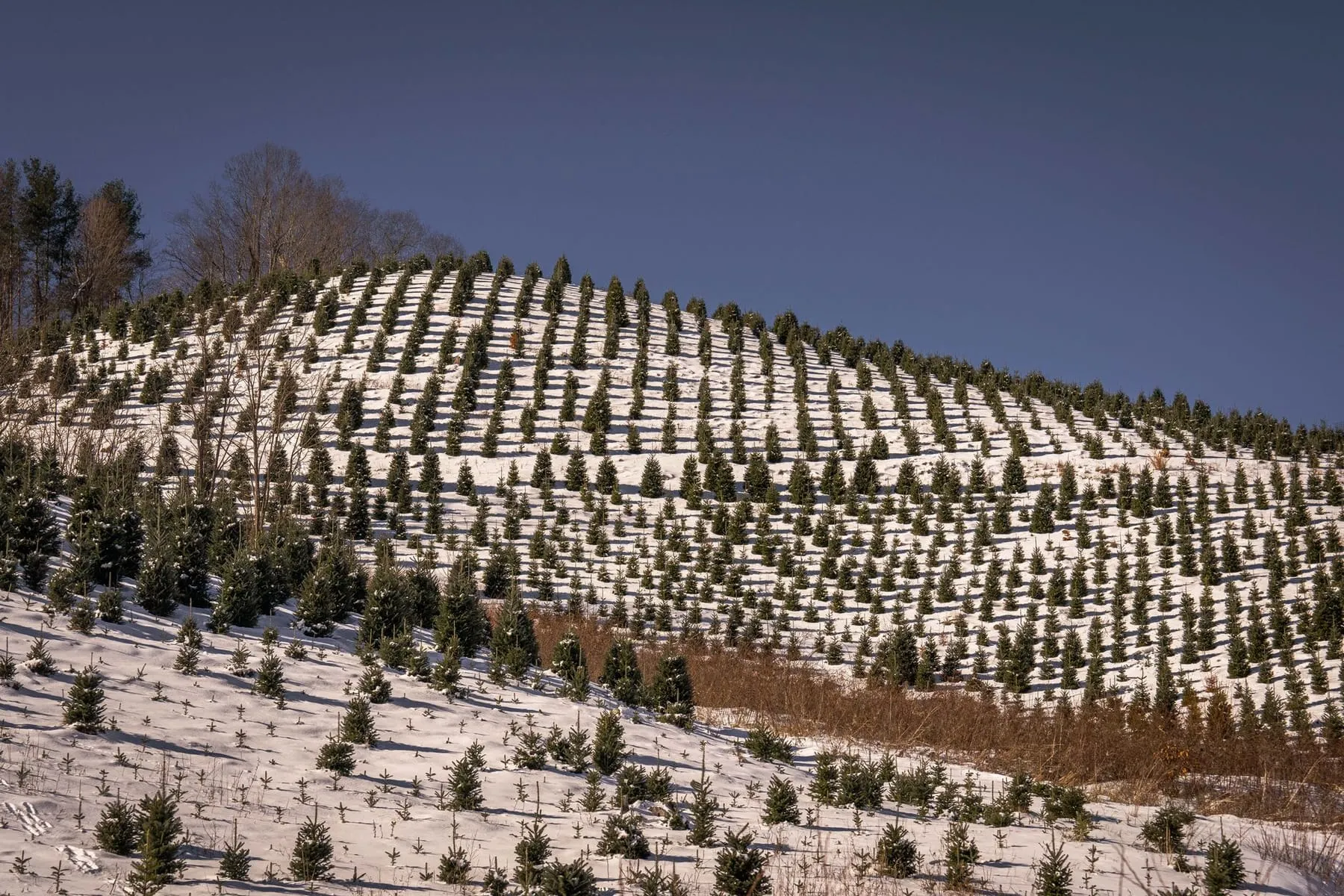
The single biggest factor in how long your tree lasts is how long ago it was cut. Many trees sold in towns are felled in November, netted and shipped, so they may already have been out of the ground for a couple of weeks before you see them.
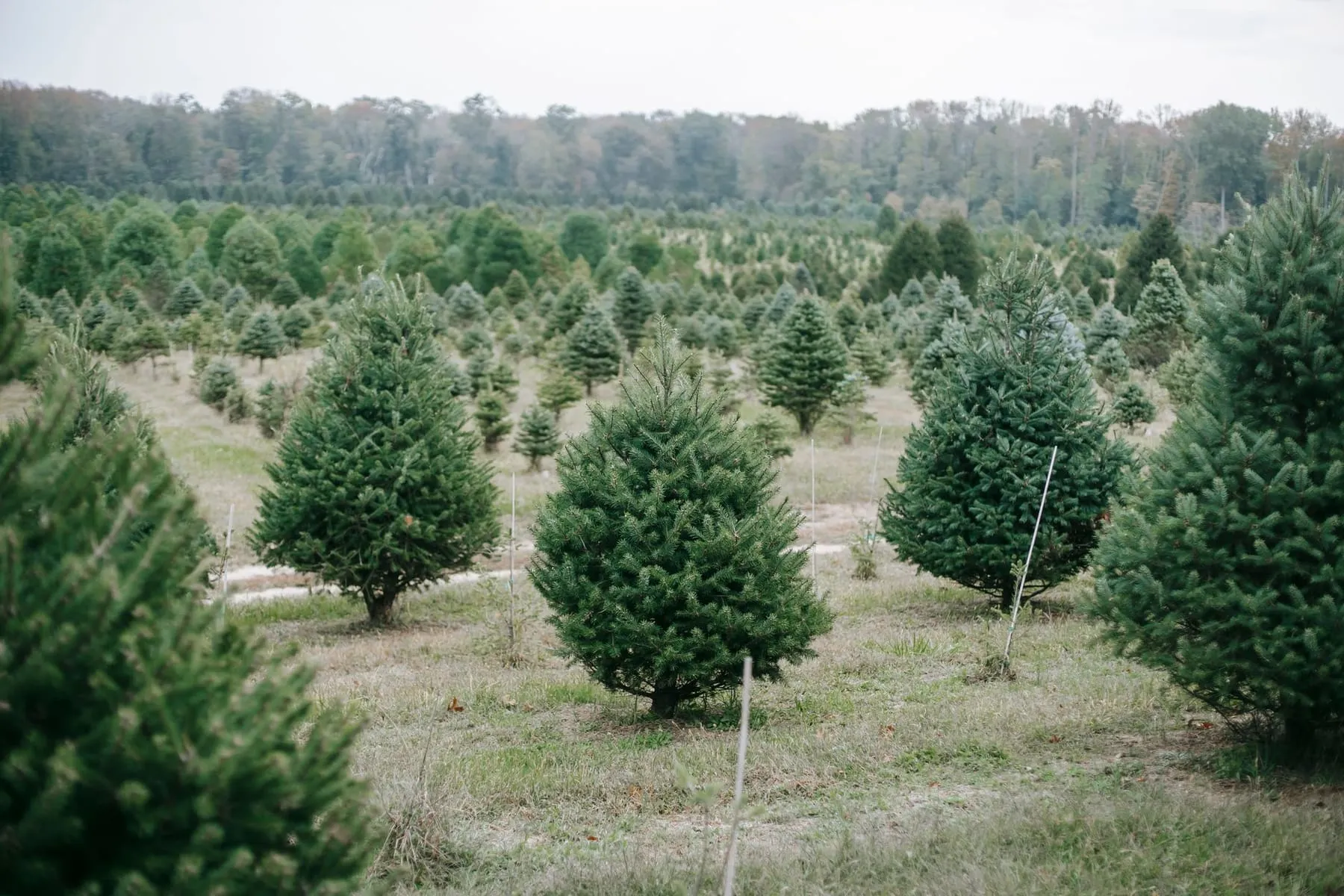
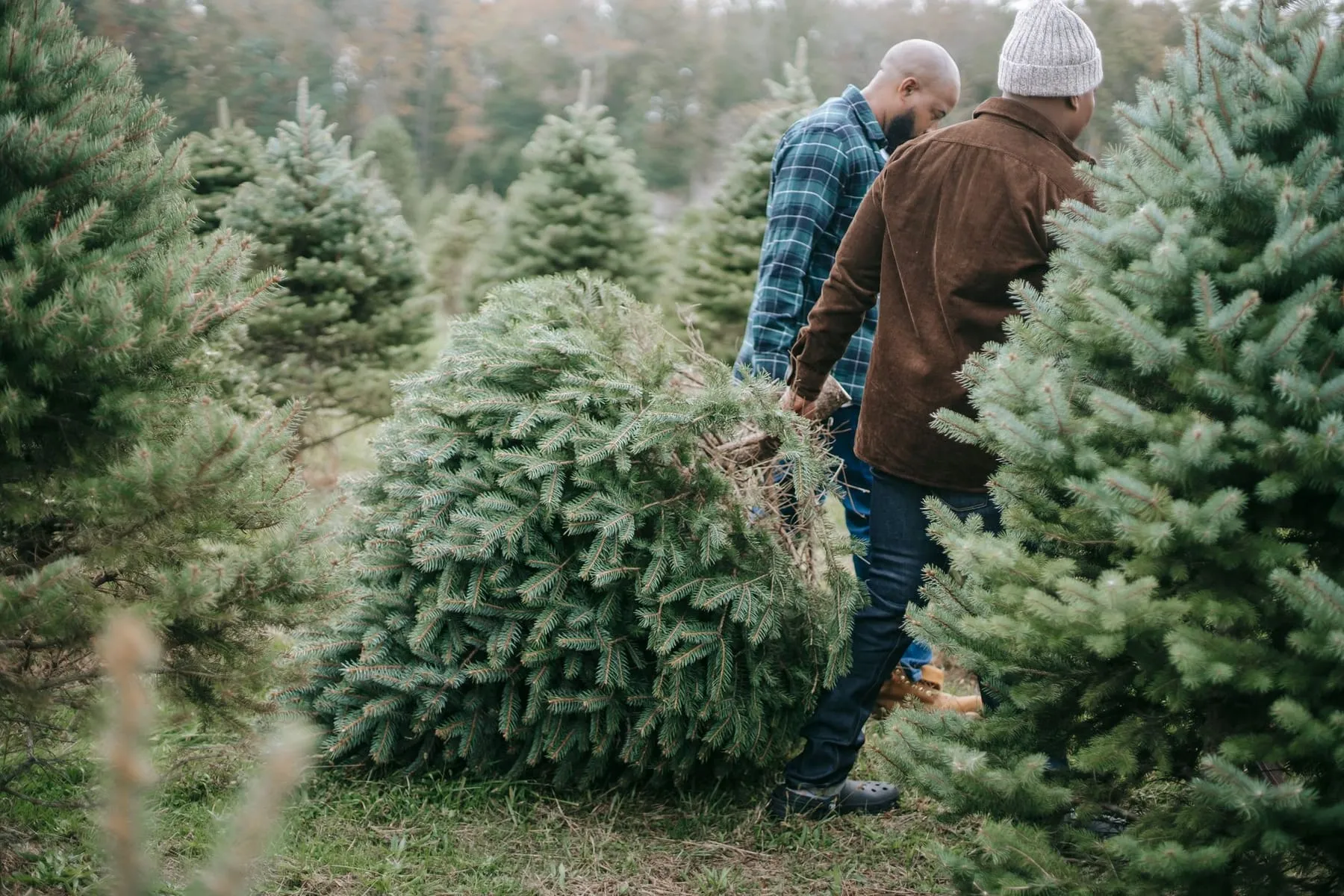
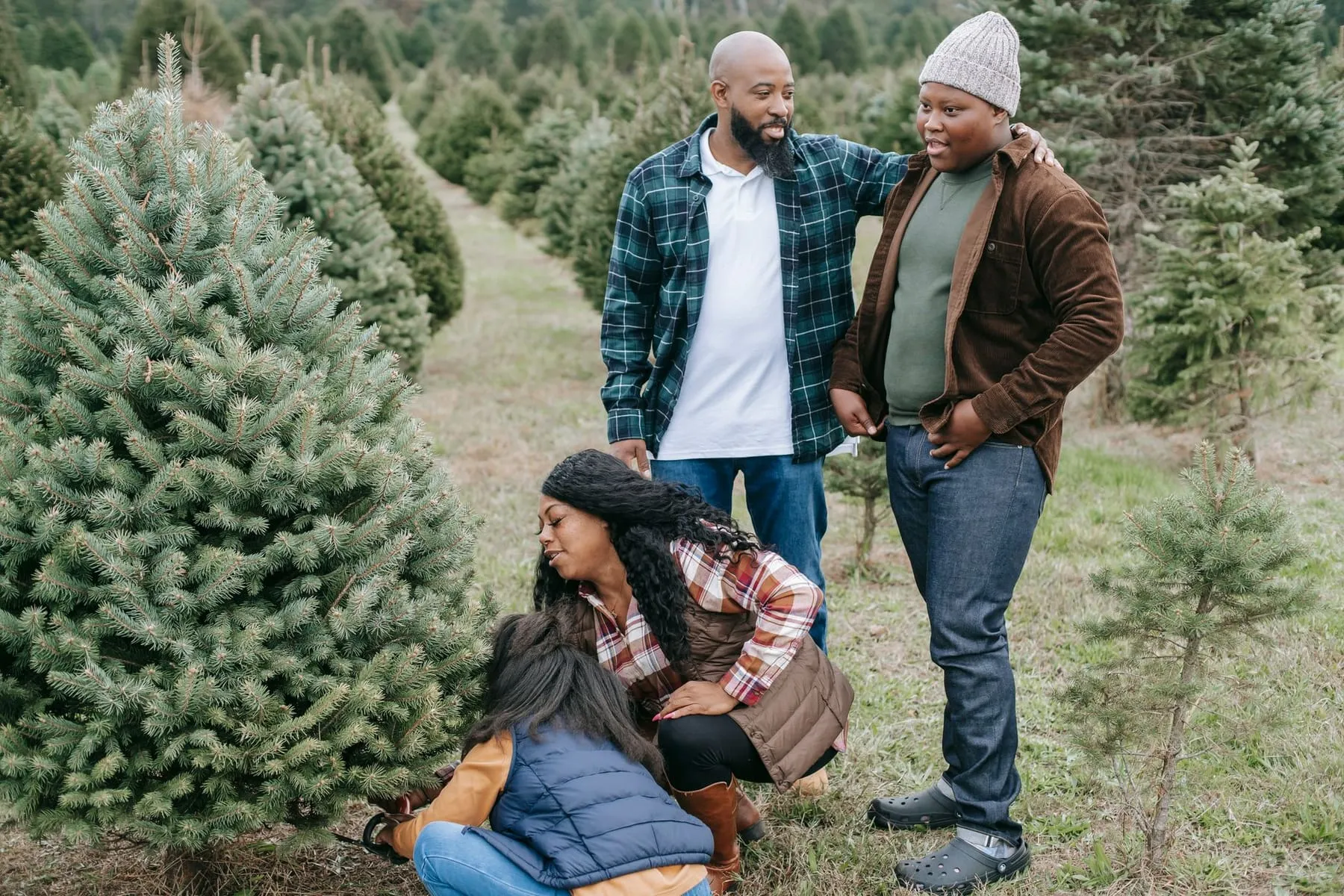
Buying from a farm, especially one where you choose a tree and it is cut on the day, gives you a head start. The tree has not had time to lose moisture, and you can see exactly what you are getting. You can find a Christmas tree farm near you by town or postcode.
If you buy from a shop or garden centre, a few quick checks help:
- Run a branch gently through your hand. Fresh needles should stay put.
- Bend a needle. Fresh fir needles bend rather than snap.
- Tap the trunk on the ground. A shower of green needles is a bad sign (a few brown inner needles are normal).
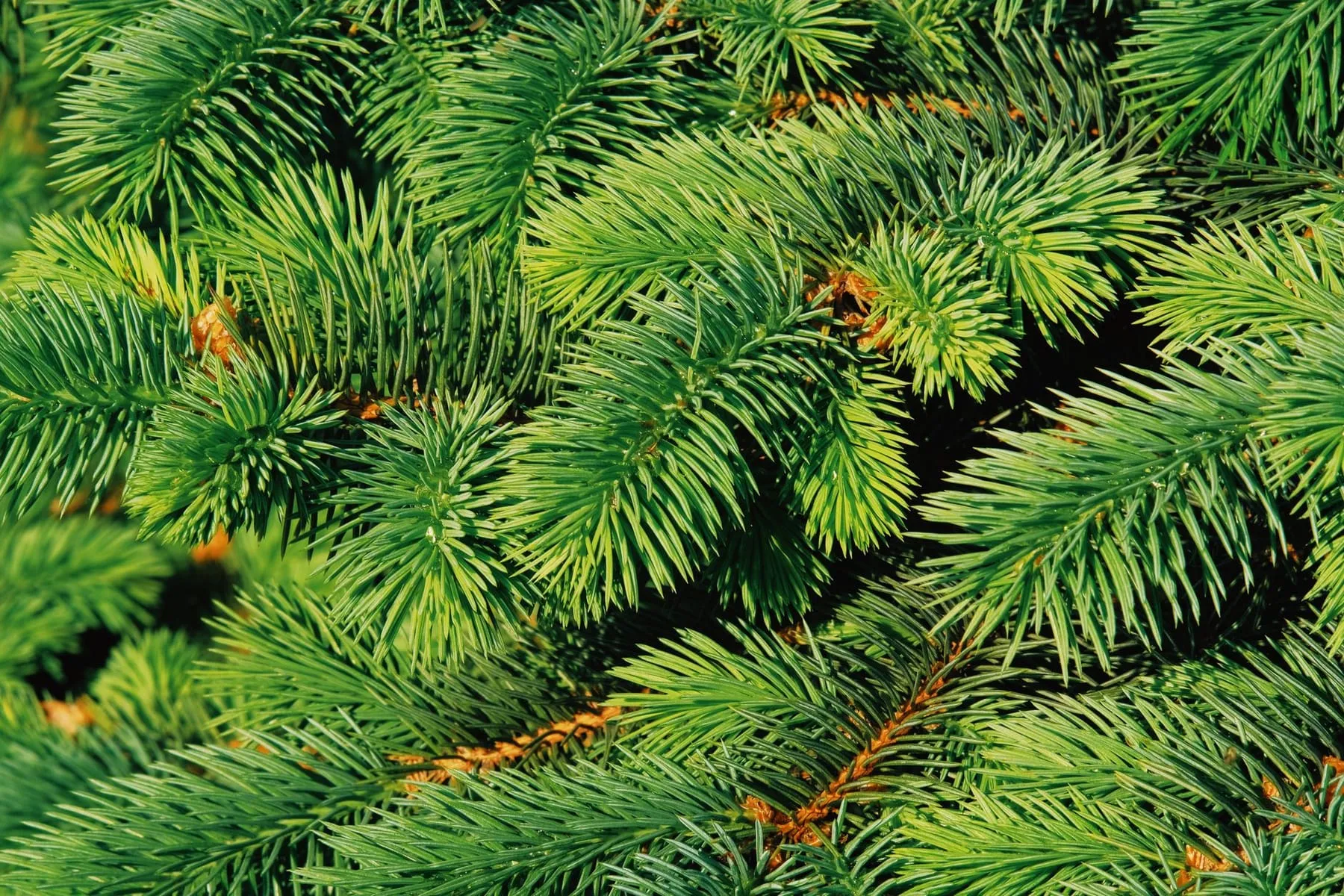
- Look at the colour. It should be a deep, even green with no grey or yellow patches.
How long do potted and root-balled trees last?
A living tree in a pot should only be indoors for around 10 to 12 days. Unlike a cut tree, it is meant to go back outside and grow on, and a long stretch in a warm, dry house can push it out of dormancy and damage it.
There are two kinds worth knowing about:
- Pot grown trees have been grown in their container, so the roots are intact. These have the best chance of surviving after Christmas.
- Pot fitted or root-balled trees were dug up and put into a pot or wrapped root ball. Many of their roots are lost in the process, and they often struggle to re-establish.
If you want a tree for the whole season, a cut tree is the more reliable choice. If you want one to plant out in January, choose a smaller pot grown tree and keep it in the coolest room you have. Our page on real cut or potted trees compares the two in more depth.
When should you buy a real tree so it lasts until Christmas?
For most households, buying in the first or second week of December gives the best balance: the tree is up for most of the season and still fresh on Christmas Day. If you want it up on 1 December, choose a Nordmann or Fraser fir and be strict about watering.
Plan backwards from when you will take it down. Traditionally, decorations come down on Twelfth Night, around 5 or 6 January, which is five weeks from the start of December. Our guides on when to put up a Christmas tree and when to take a Christmas tree down go through the dates.
If you buy early, you do not have to bring it straight in. A tree can wait outside in a cool, sheltered spot with its trunk in a bucket of water until you are ready to decorate. Cut a fresh slice off the base before it goes into the stand.
Signs your Christmas tree is drying out
A drying tree tells you it is struggling well before it becomes a real problem. Watch for these signs:
- Green needles dropping when you brush past, rather than just a few brown ones from inside.
- Brittle needles that snap cleanly instead of bending.
- Drooping branches, especially near the top, where the tree struggles most to draw water.
- Dull or greyish colour and a weaker scent.
- The water level not going down. A fresh tree drinks a lot; if it stops, the cut end may have sealed over.
If you catch it early, top up the water straight away, turn the heating down in that room and keep lights and candles well away. If the water has not gone down for a day or two, it may be worth taking the tree out of the stand and cutting a thin slice off the base to reopen it.
A tree that is very dry is a fire risk and is best taken down. When the time comes, see what to do with your Christmas tree after Christmas for recycling and collection options.
Questions people ask
Can a real Christmas tree last from 1 December to Twelfth Night?
Yes, a fresh Nordmann or Fraser fir that is cut close to the day you buy it and kept well watered can comfortably last five weeks or more. Spruces are less likely to make it without noticeable needle drop.
How long can a real Christmas tree go without water?
Not long. Once the cut end dries, a seal of sap forms within a few hours and the tree struggles to drink, so keep the stand topped up every day and never let the water drop below the base of the trunk.
Do real Christmas trees last longer in a cold room?
Yes. A cooler room slows the rate the tree loses moisture, so a tree in a cool hallway or a room with the radiator turned down will usually keep its needles longer than one beside a fire.
Is it too early to buy a real Christmas tree in November?
For most people, late November is the earliest sensible time. A tree bought in mid November would need to last six or seven weeks to reach Twelfth Night, which is a stretch even for a Nordmann fir.
How long does a potted Christmas tree last indoors?
A living tree in a pot is best kept indoors for no more than 10 to 12 days, in a cool spot, before going back outside. Longer spells in a warm house can stress it and make it less likely to survive.