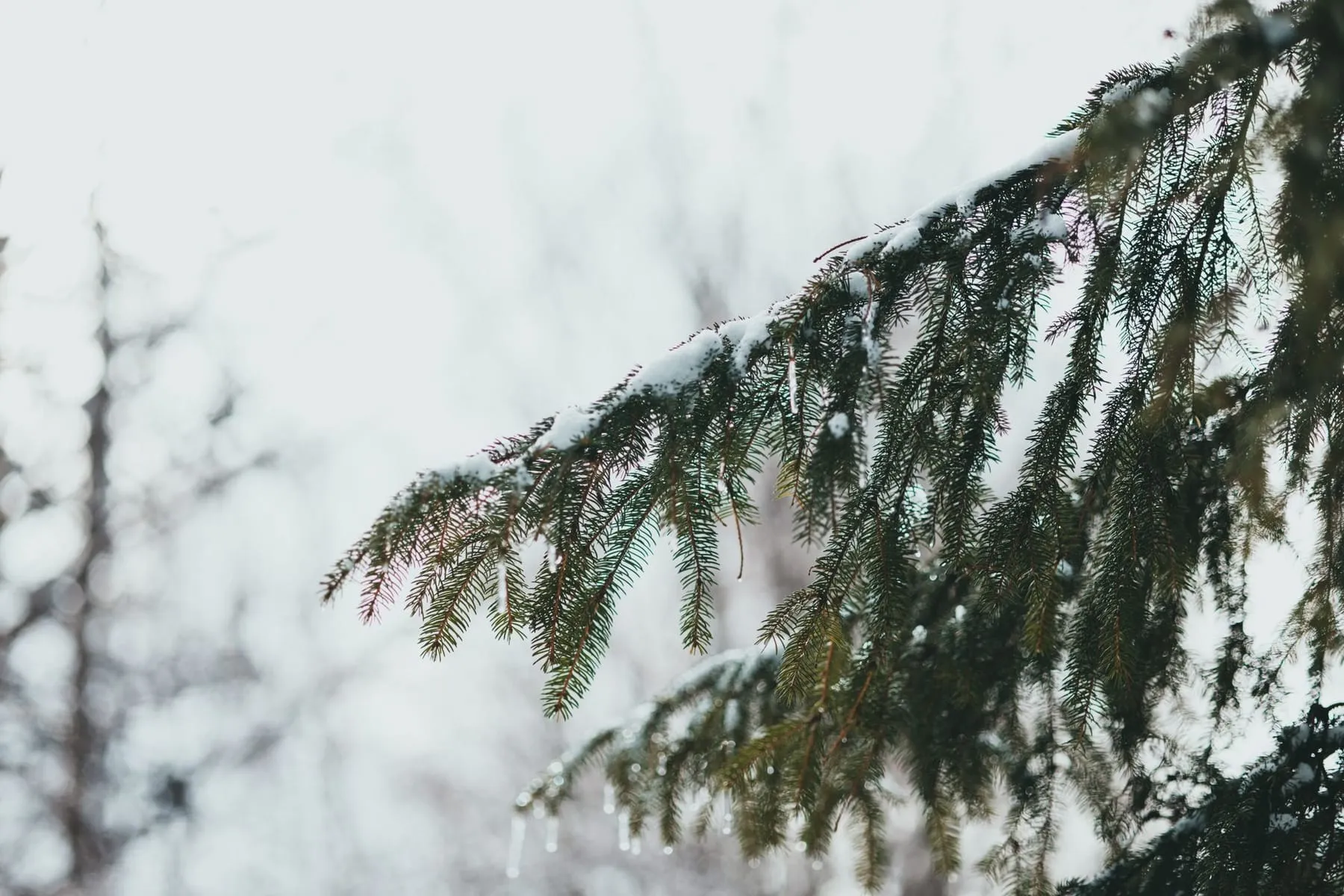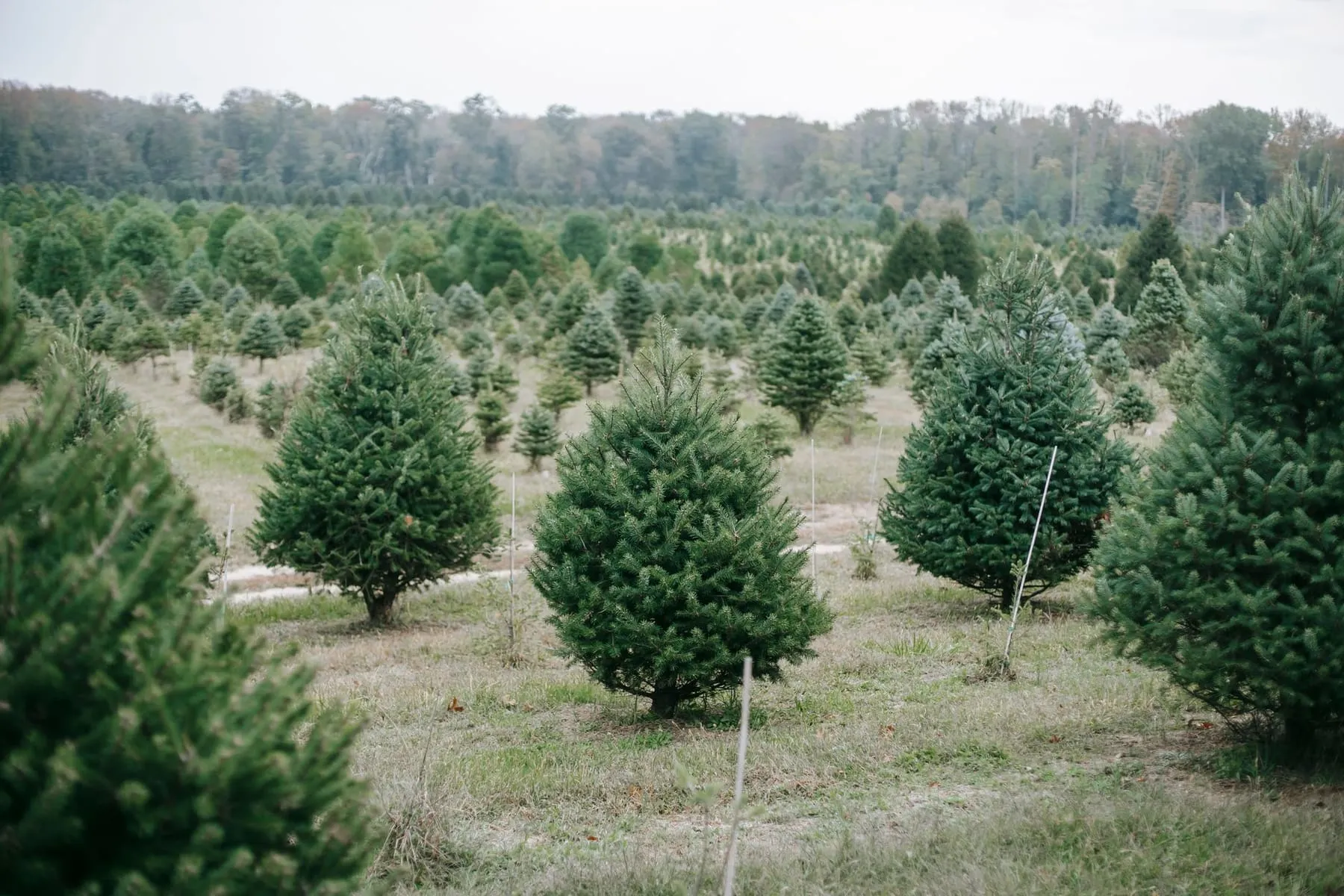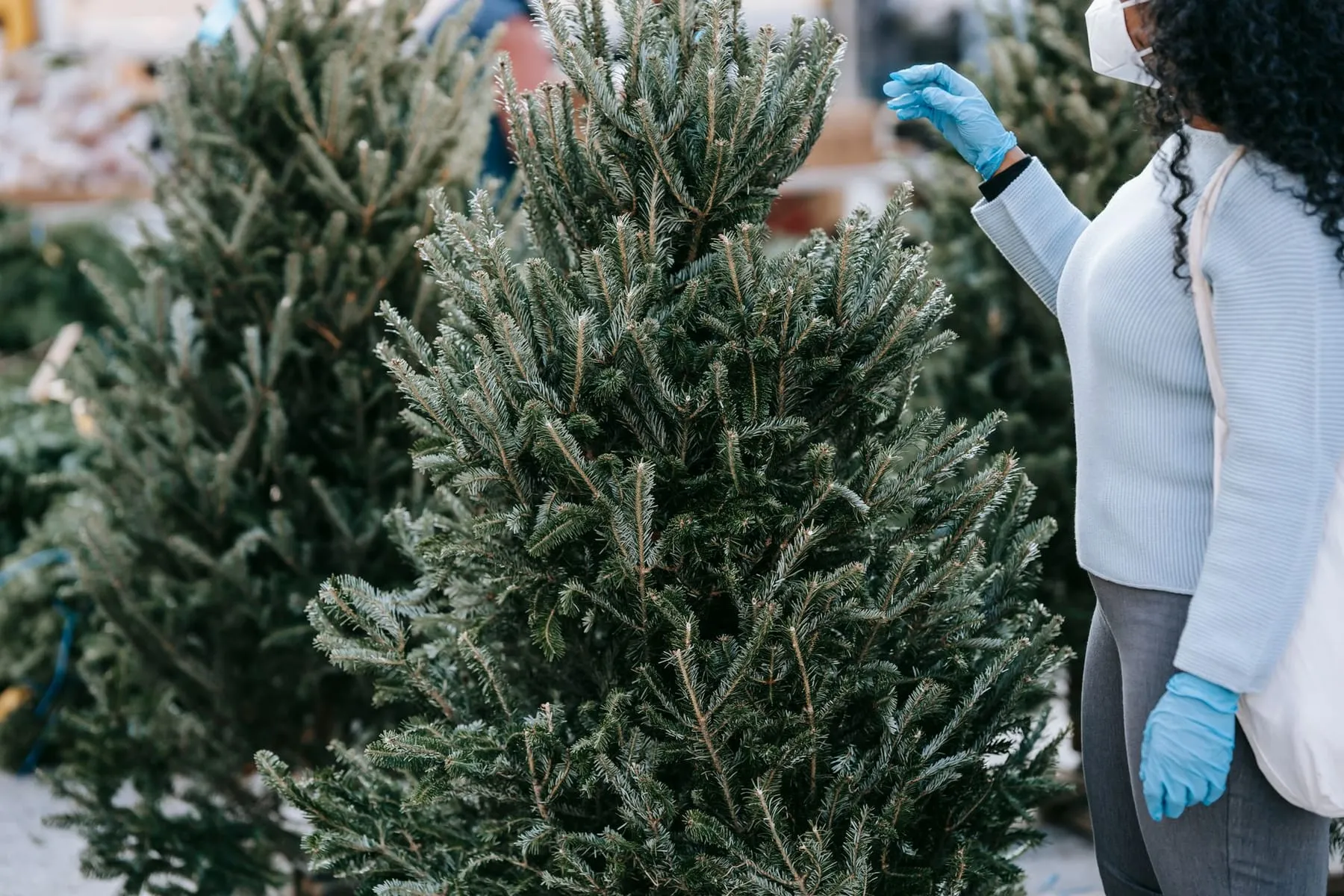
A Christmas tree is any evergreen conifer grown and cut to bring indoors for the festive season. In practice, that means a short list of firs, spruces and pines, each with its own needle feel, scent, shape and staying power.
Knowing which is which makes it much easier to choose. Below you will find the varieties you are most likely to see on a UK farm, how to tell them apart, and which one suits different homes.
What types of trees are used as Christmas trees?
The trees used as Christmas trees in the UK fall into three groups: firs, spruces and pines. All are conifers that keep their needles through winter, grow in a neat cone shape, and can be farmed in rows over several years.
- Firs (the Abies family) have soft, flat needles that attach to the branch with a small round base, like a tiny suction cup. They tend to hold their needles well indoors.
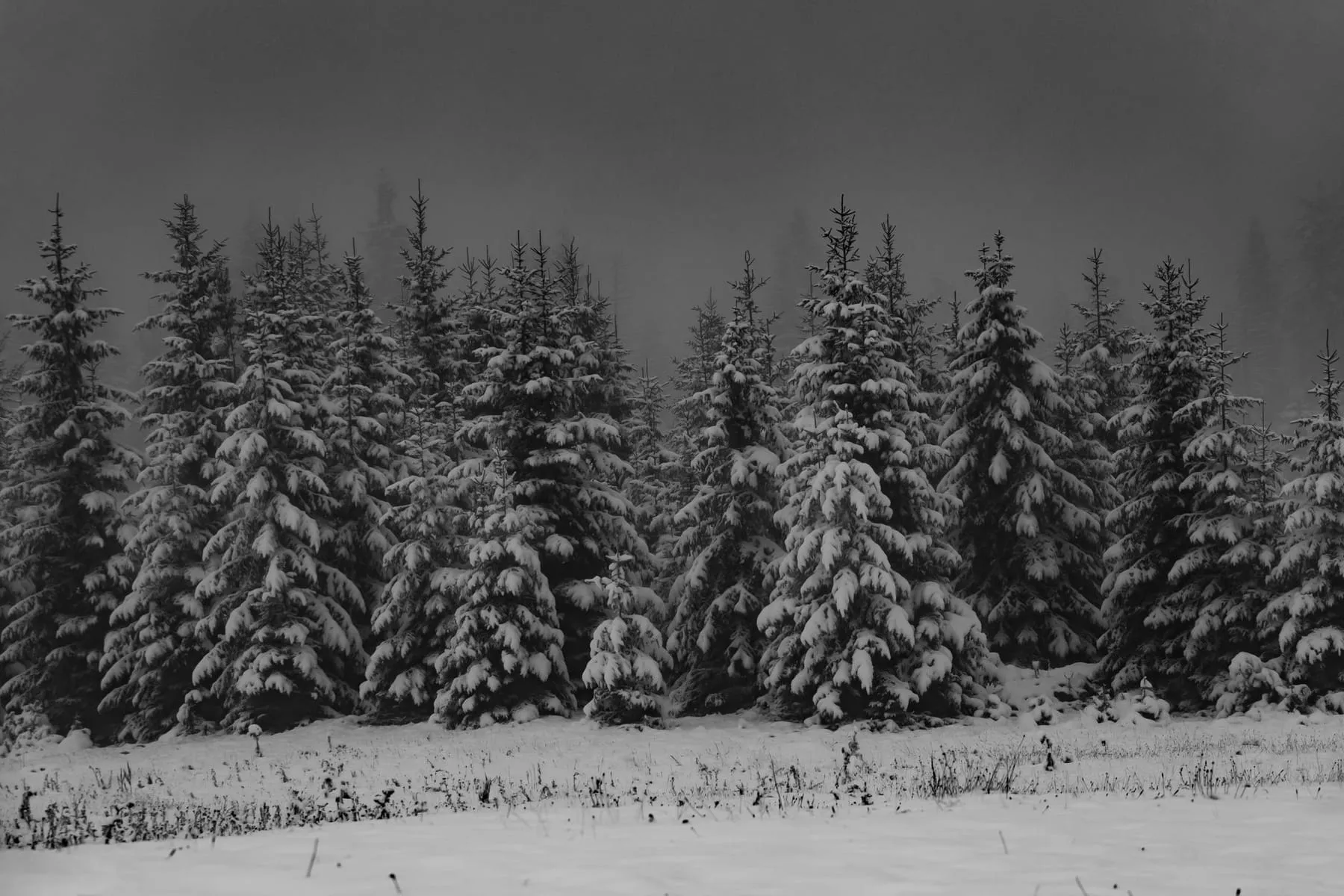
- Spruces (the Picea family) have sharper, square needles on little woody pegs. They usually smell stronger but drop needles sooner in a warm room.
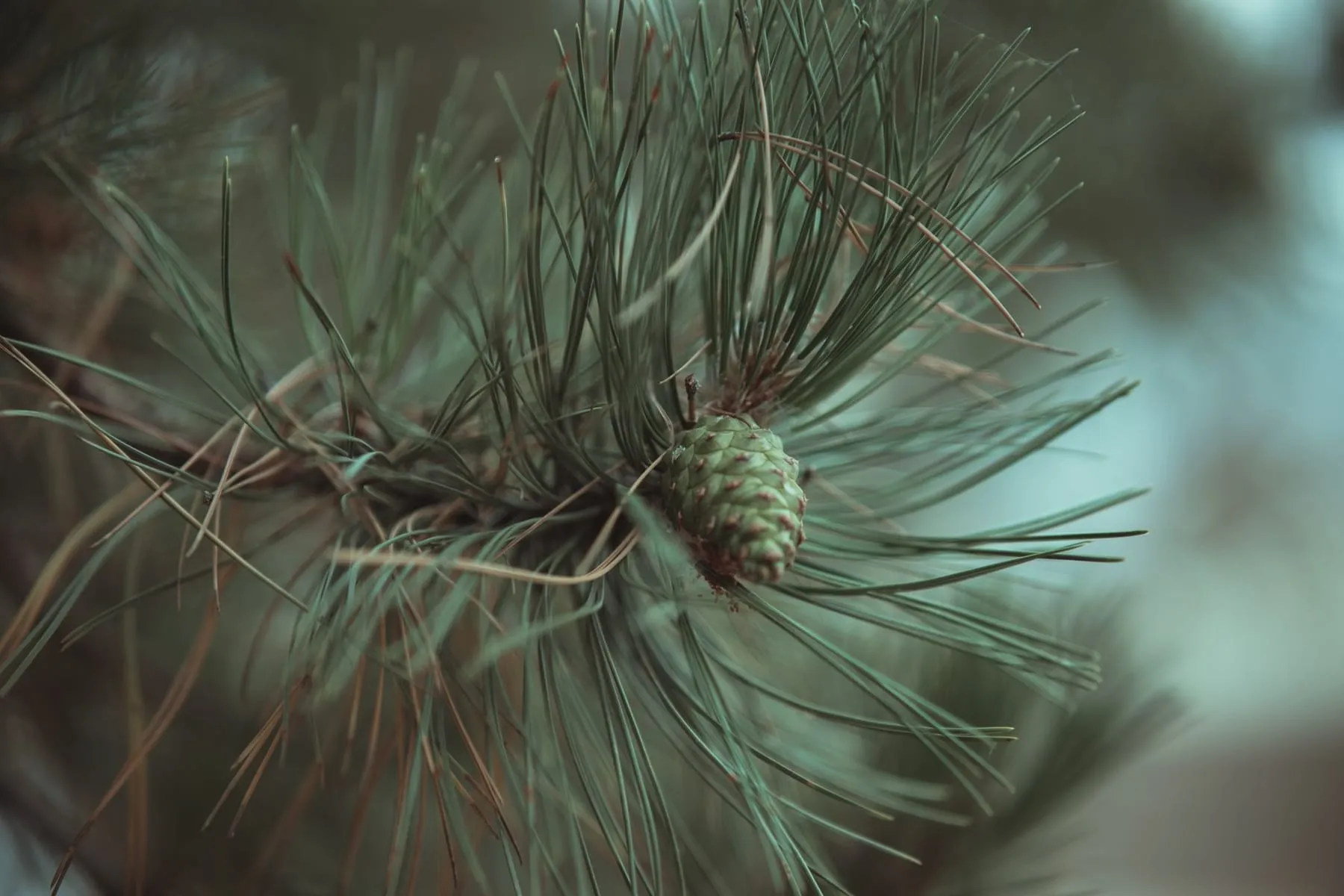
- Pines (the Pinus family) carry long needles in bundles of two or more. They hold needles well and have a resinous scent, but their open, airy shape is less traditional.
Douglas fir is a slight oddity: despite the name, it belongs to its own group, but it is grown and sold just like a true fir.
The main Christmas tree varieties in the UK
These are the varieties you will meet most often on British farms, roughly in order of popularity.
| Variety | Group | Needles | Needle drop | Scent |
|---|---|---|---|---|
| Nordmann fir | Fir | Soft, glossy, dark green | Very low | Mild |
| Norway spruce | Spruce | Short, sharp, mid green | Fairly high | Strong, classic |
| Fraser fir | Fir | Soft, silvery underside | Low | Fresh, slightly citrus |
| Noble fir | Fir | Blue green, upturned | Low | Pleasant, moderate |
| Blue spruce | Spruce | Stiff, prickly, blue grey | Low for a spruce | Moderate |
| Scots pine | Pine | Long, twisted, in pairs | Low | Resinous pine |
| Lodgepole pine | Pine | Long, in pairs | Low | Resinous pine |
Nordmann fir
The Nordmann fir is the UK’s best selling Christmas tree by a wide margin. It has soft needles that will not prickle small hands, a full shape, and some of the best needle retention of any tree. Its scent is gentle rather than strong.
Norway spruce
The Norway spruce is the traditional British Christmas tree and the variety behind the famous tree given to London each year by the people of Oslo. It has that classic forest smell and tends to be cheaper, but it drops needles faster once it dries out.
Fraser, Noble and Blue spruce
Fraser firs are slimmer and suit smaller rooms. Noble firs have stiff, well spaced branches that are good for heavy decorations. Blue spruces have striking silvery blue needles, though they are sharp to handle.
How can you tell a fir from a spruce?
The quickest test is to gently pull a single needle off a branch. A fir needle comes away cleanly and leaves a smooth, round scar. A spruce needle tears away with a small woody peg, leaving the twig rough like sandpaper.
A few other clues help:
- Roll the needle. Fir needles are flat and will not roll between your fingers. Spruce needles are square and roll easily.
- Feel the branch. Firs feel soft. Spruces are prickly, especially Blue spruce.
- Look underneath. Many firs have two pale silvery stripes on the underside of each needle.
- Check the cones. Fir cones stand upright on the branches; spruce cones hang down. You will not often see cones on a farmed tree, but if you do, it settles the question.
Pines are easiest of all: their needles are much longer and grow in bundles rather than singly.
Which Christmas tree should you choose?
For most households, the Nordmann fir is the safest choice because it is soft, full and keeps its needles well into January. If scent matters more to you than tidiness, a Norway spruce or Fraser fir will fill the room with a stronger fragrance. Our guide to which Christmas tree smells best goes into this in more detail.
A few quick pointers by situation:
- Young children or pets: Nordmann fir, for its soft needles and low drop.
- Small flat or narrow space: Fraser fir or a slim Nordmann.
- Heavy glass baubles: Noble fir, whose stiff branches take weight.
- Tight budget: Norway spruce, usually the cheapest per foot.
- Long display period: any fir; see our guide to Christmas trees that don’t drop needles.
If you are weighing up price, our Christmas tree price guide covers typical UK costs by variety and height. The older choosing a Christmas tree page also has tips on checking a tree before you buy.
Should you get a cut, potted or rooted tree?
Most real Christmas trees are cut, meaning they have been felled and will last a few weeks with water. Potted trees are grown in a container and can sometimes be replanted, while “containerised” or rooted trees have been dug from the field and placed in a pot, which makes them harder to keep alive afterwards.
A cut tree gives you the widest choice of size and variety. A genuinely pot grown tree is smaller but can come back year after year if it spends the rest of the year outdoors and is only brought inside for a short spell. There is more detail on the trade offs in our guide to choosing a real cut or potted tree.
Whichever you pick, freshness counts for more than variety. A Norway spruce cut last week will outlast a Nordmann that has been sitting in a net since November, which is why our guide on how to keep a Christmas tree alive starts with buying fresh.
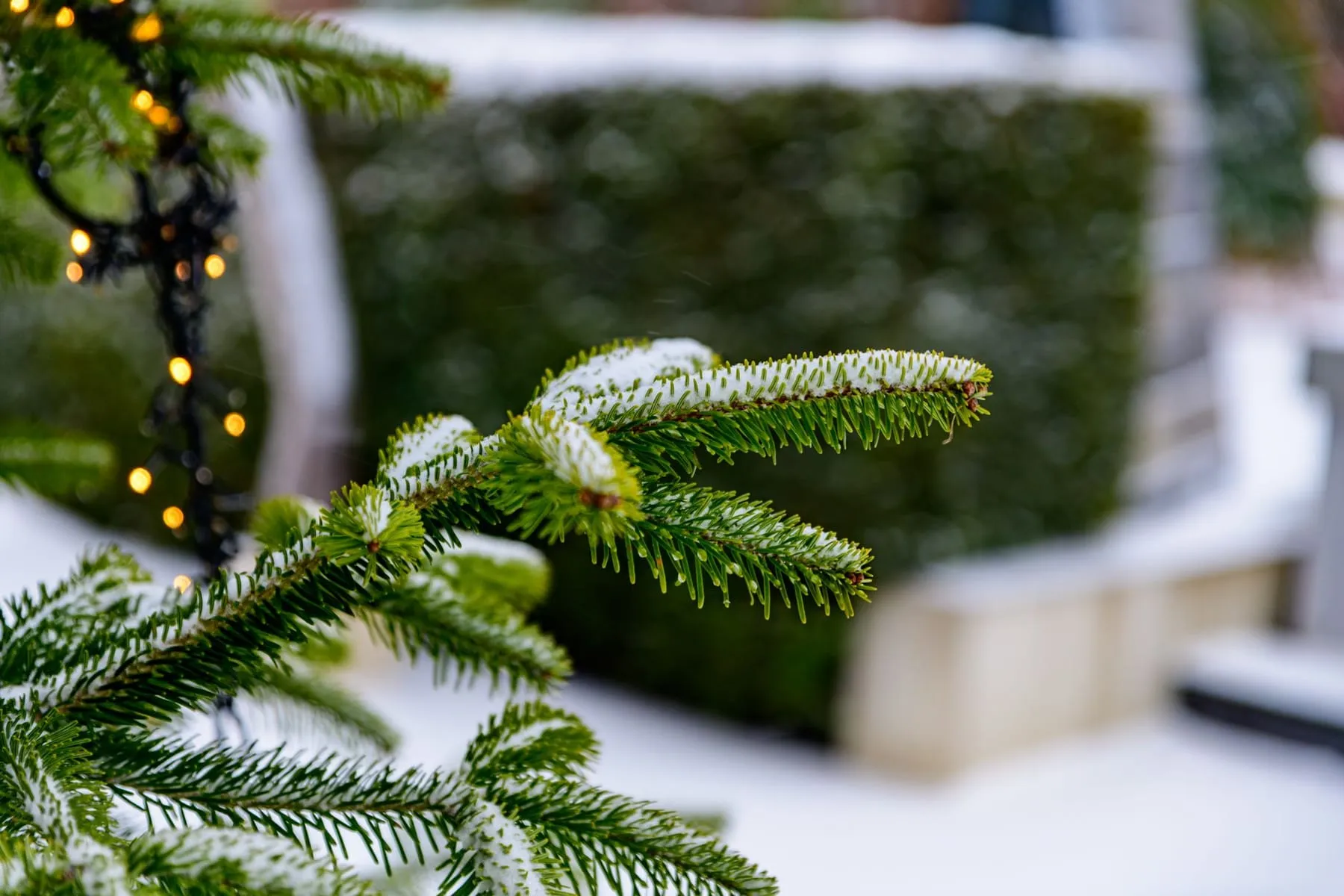
Where to see Christmas tree varieties side by side
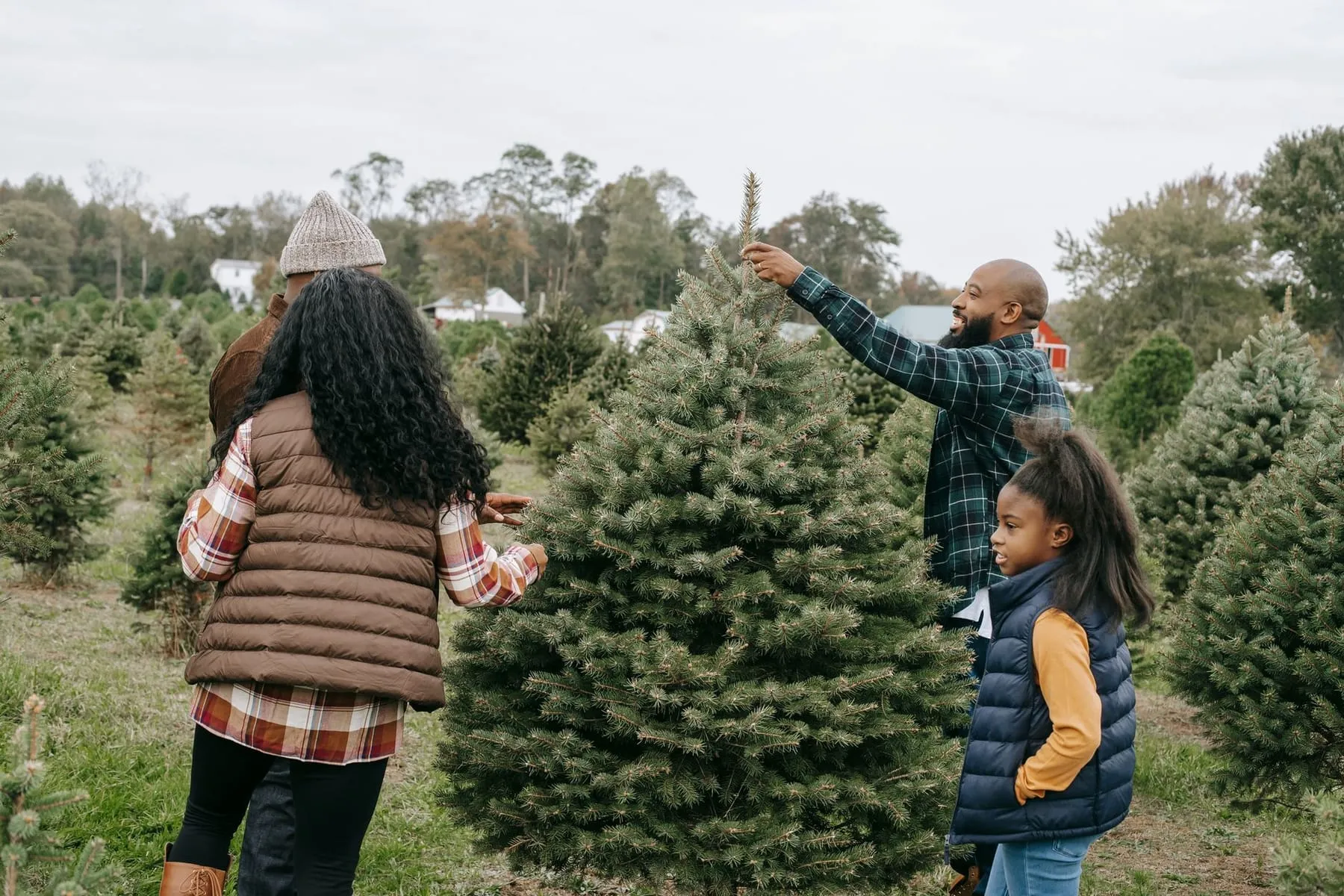
The best way to understand the differences is to see the trees growing. On a Christmas tree farm you can walk the rows, feel the needles, smell the branches and pick the exact tree you want, often cut while you wait.
Many farms grow several varieties, so you can compare a Nordmann and a Norway spruce next to each other before deciding. Staff can usually tell you how long ago a tree was cut and which variety will suit your room.
To find one near you, search for a Christmas tree farm by town or postcode and check which varieties each farm lists.
Questions people ask
Is a Christmas tree a pine tree?
Sometimes, but not usually in the UK. Most British Christmas trees are firs (such as the Nordmann) or spruces (such as the Norway spruce), and true pines like the Scots pine make up a small share of sales.
What is the most popular Christmas tree in the UK?
The Nordmann fir. It is the tree you will see on most farms, garden centres and supermarket forecourts because it keeps its needles well and has soft, glossy foliage.
How long does it take to grow a Christmas tree?
Roughly 7 to 10 years for a typical 6 ft tree, depending on the variety and growing conditions. Nordmann firs are slow starters, which is one reason they cost a little more than spruces.
Are Christmas trees grown in the UK?
Yes. Many of the trees sold in Britain are grown on farms across England, Scotland and Wales, although some are imported, often from Denmark. Buying from a local farm usually means a fresher tree cut closer to the day you collect it.
Can you use a holly or yew as a Christmas tree?
You can decorate any shrub you like, but holly and yew are not sold as Christmas trees. Yew is also highly toxic to pets and people, so it is best kept outdoors.