Fluffing a Christmas tree means shaping its branches so they spread out and hide the trunk, giving a full, natural look. On an artificial tree you do it by hand, tip by tip. On a real tree, it mostly happens on its own once the netting comes off.
Either way, it is the step that makes the biggest difference to how your tree looks once it is decorated, so it is worth doing properly before a single bauble goes on.
What does fluffing a Christmas tree mean?
Fluffing is the job of separating and spreading a tree’s branches and tips so the tree looks full and even. Artificial trees are packed flat for storage, so the tips are squashed together and the tree looks thin until you shape them. Real trees are wrapped in netting for transport, which pulls the branches up against the trunk.
A well fluffed tree has no obvious gaps, the trunk is hidden from most angles, and decorations have plenty of branches to sit on. It also helps lights look brighter, because they can be tucked in among the branches rather than lying on the surface.
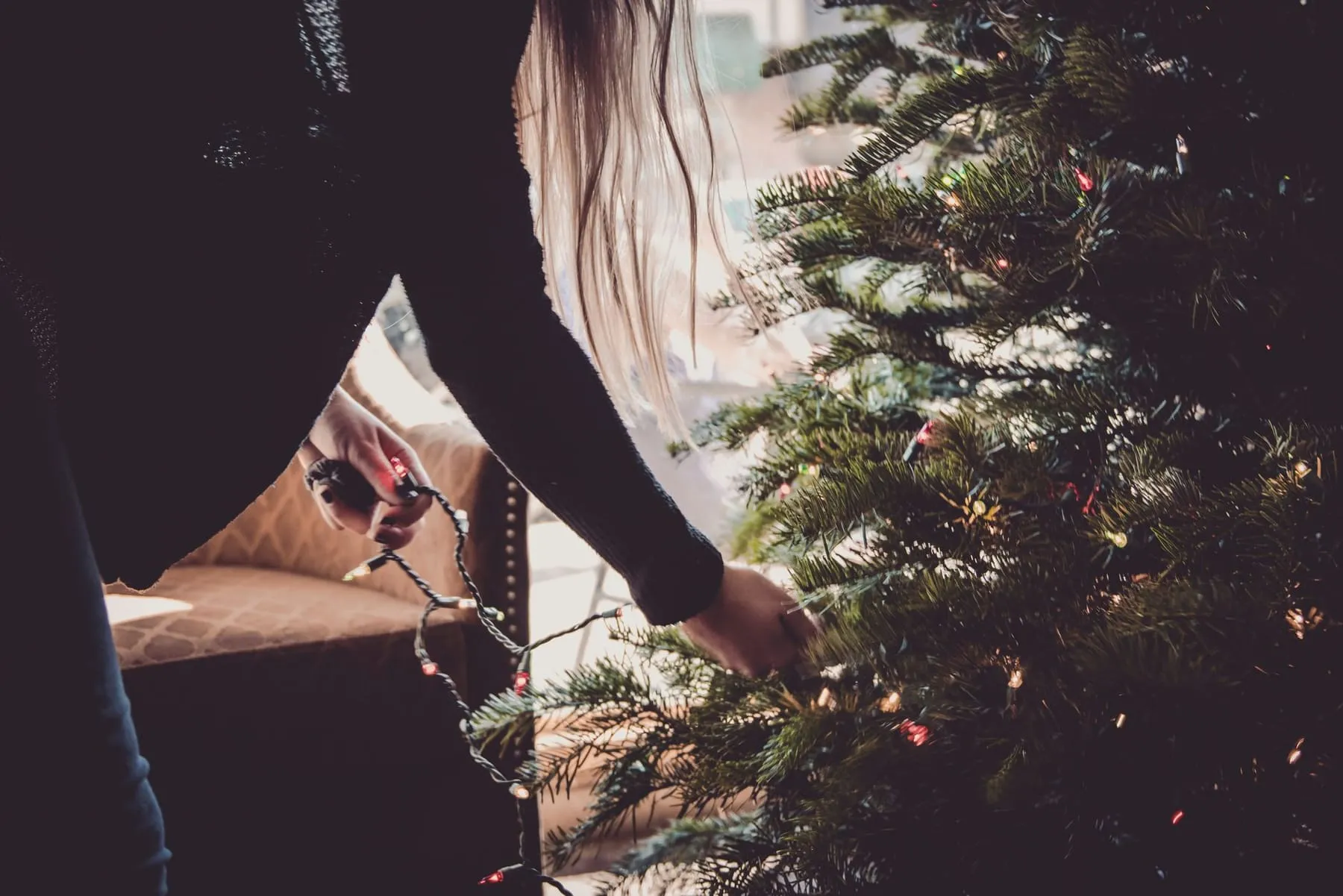
How to fluff a real Christmas tree
To fluff a real tree, put it in its stand, cut the netting off and leave it for around 24 hours to let the branches settle. The branches relax and drop as the tree warms up and takes on water, and most of the shaping happens by itself.
Follow these steps:
- Put the tree in its stand with the netting still on. It is much easier to carry and position while it is wrapped.
- Cut the netting from the bottom up with scissors, taking care not to snip the branches.
- Give the tree a gentle shake to release any loose needles caught inside.
- Leave it overnight, ideally a full day, before decorating.
- Tease out any branches that are still pointing upwards, easing them gently downwards and outwards with your hands.
Make sure the tree is in water from the start. A tree that is drinking well opens up better, and it will stay fresh for longer too. Our guide on how to keep a Christmas tree alive covers the base cut and watering.
Some varieties fill out more than others. Nordmann firs have soft, layered branches that open beautifully, while Noble firs have stiffer, more spaced tiers. If you have not chosen yet, our guide to what trees are Christmas trees explains how each one looks. Picking your own at a farm means you can see the shape before it is netted, so you can find a Christmas tree farm near you and choose one that is already full.
How to fluff an artificial Christmas tree, step by step
To fluff an artificial tree, work from the bottom section up, and on each branch separate every tip and spread them in different directions. The trick is to fluff from the inside out, so the branches near the trunk are shaped as well as the outer ones.
- Put on gloves and clear some space around the tree.
- Assemble the bottom section only. Fluffing one tier at a time is far easier than reaching into a fully built tree.
- Start with the branch tips nearest the trunk. Separate each one and bend it slightly up or to the side.
- Work outwards along the branch. Spread the tips in a fan: one up, one to the left, one to the right, one down. Avoid making them all point the same way.
- Shape the end of each branch so the tip points slightly upwards, like a real tree.
- Move around the tree until the whole tier is done, then add the next section and repeat.
- Step back and check. Look from a few metres away with your eyes half closed. Gaps show up as dark patches. Fill them by adjusting nearby tips.
Leave the very top section until last and keep it slimmer, so the tree tapers neatly. If your tree is pre-lit, plug it in before you start so you can work around the bulbs and check every section works.
How long does it take to fluff a Christmas tree?
Fluffing an average 6 to 7 ft artificial tree usually takes around 30 minutes to an hour, and larger or very full trees can take longer. Trees with lots of tips, or hinged branches that need opening one by one, take the most time.
A real tree takes almost no hands-on time, but it needs patience. Allow at least overnight, and ideally a full day, between removing the netting and decorating. If you can, put the tree up the day before you plan to decorate.
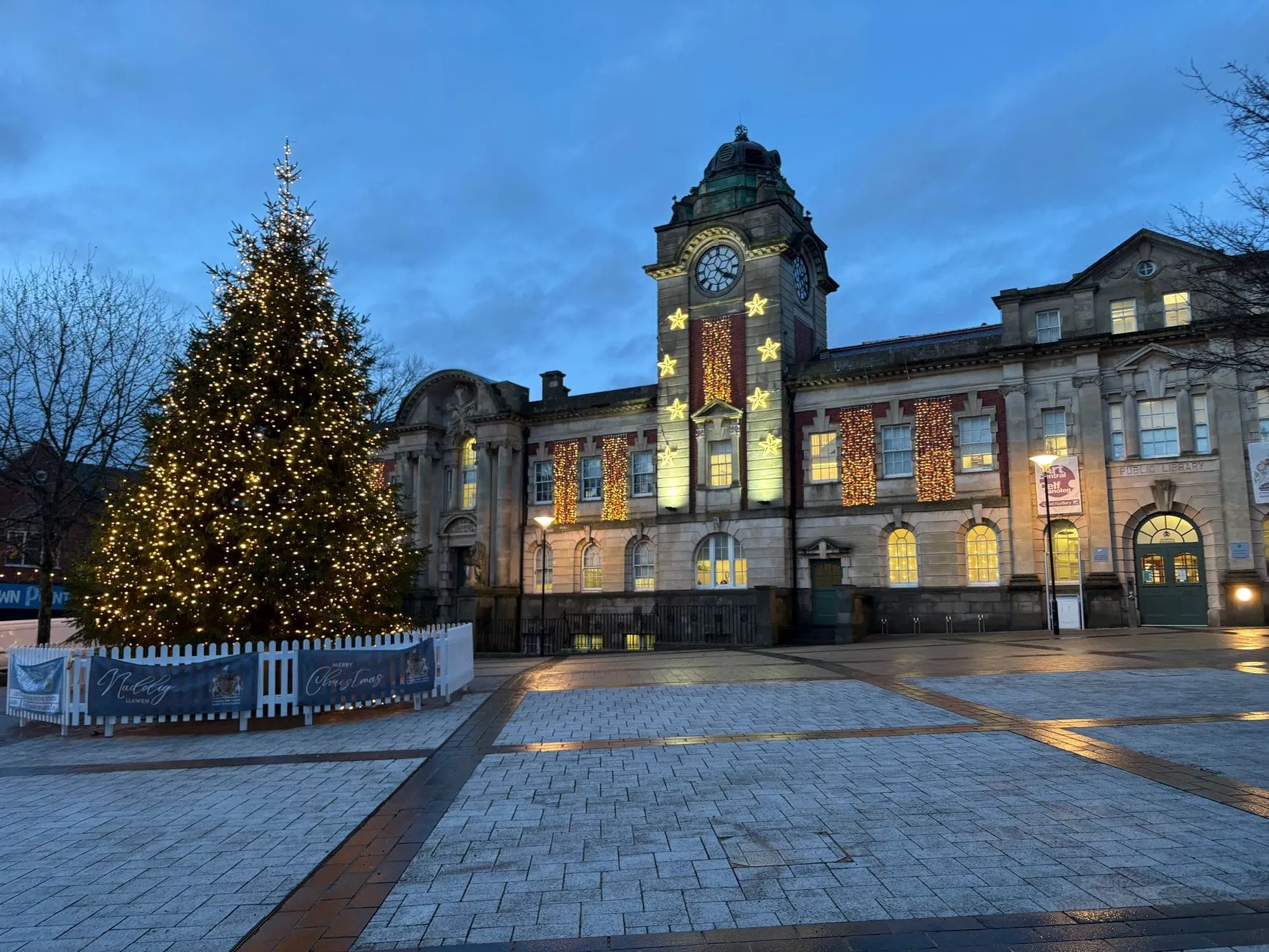
Tips for a fuller looking Christmas tree
Once the branches are shaped, a few extra touches make any tree look fuller:
- Light from the inside. Wrap lights along the branches towards the trunk, not just around the outside. This adds depth and fills dark gaps. Our guide on how to put lights on a Christmas tree shows how.
- Hang some decorations deep in the tree. Larger baubles placed close to the trunk fill holes and make the tree look denser.
- Turn the best side outwards. Most trees have a fuller side. Rotate it to face the room and put the sparse side against the wall.
- Use ribbon or garlands to cover any patch that will not fill.
- Add picks or sprigs. Real foliage such as fir offcuts, eucalyptus or holly tucked into gaps looks natural, especially on an artificial tree.
For more ideas, see our guide on how to decorate a Christmas tree.

How to store an artificial tree so it fluffs more easily
Storing an artificial tree carefully makes next year’s fluffing much quicker. Before you pack it away, fold the branches up gently towards the trunk rather than forcing them flat, and wrap each section loosely.
Use a storage bag or box that is large enough to avoid crushing, and keep it somewhere dry and not too hot, as a hot loft can make plastic tips brittle. Avoid stacking heavy boxes on top. Upright storage bags, which let the tree stand assembled under a cover, save the most time but need more space.
If your tree has become flat and tired over the years, or you are fed up with an hour of fluffing every December, a real tree is worth considering. It does most of the work itself, and once it has had a day to settle it looks full without any effort. When the season is over, it can be recycled rather than stored, and you can see how long a real Christmas tree lasts to plan the timing.
Questions people ask
Do you fluff a Christmas tree before or after the lights?
Before. Fluff the branches first so you can see the tree's true shape, then add lights, working them in along the branches. Fluffing afterwards tangles the wires and dislodges bulbs.
Why does my artificial Christmas tree look sparse?
Usually because the tips have not been separated and are still bunched together from storage. Fluffing the inner tips near the trunk, not just the outer ones, fills most gaps.
Should I wear gloves to fluff a Christmas tree?
Yes. Artificial tips can scratch and leave hands sore after an hour, and a real fir or spruce can be prickly and sticky with sap. Light gardening gloves work well.
Do pre-lit trees need fluffing?
Yes, they need the same fluffing as any artificial tree. Work carefully around the wires and plug the lights in before you start so you can spot any section that is not working.
Will a real Christmas tree open up on its own?
Mostly, yes. Once the netting is removed and the tree is in a warm room with water, the branches relax and drop over a day or so. Only a few may need a gentle nudge.