Lights are the first thing you put on a tree and the last thing people forget. A good set turns a fresh fir into the warm centre of the room. A poor one buzzes, flickers or gives the branches a cold, blueish glare.
The short version: choose LED, choose warm white unless you love colour, buy enough of them, and buy from somewhere you trust. The details below will help you pick the right set for your tree and your home.
Which Christmas tree lights are best overall?
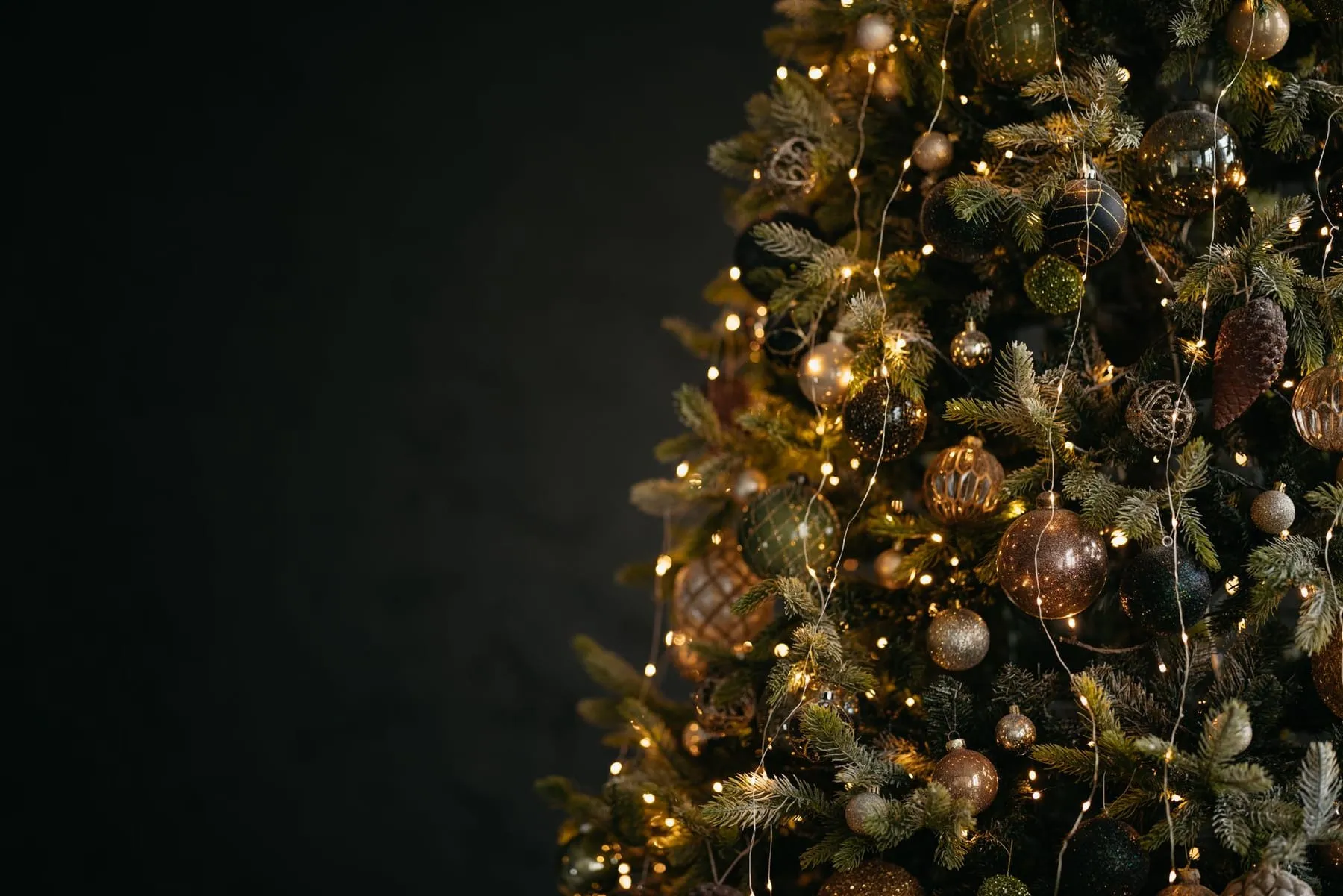
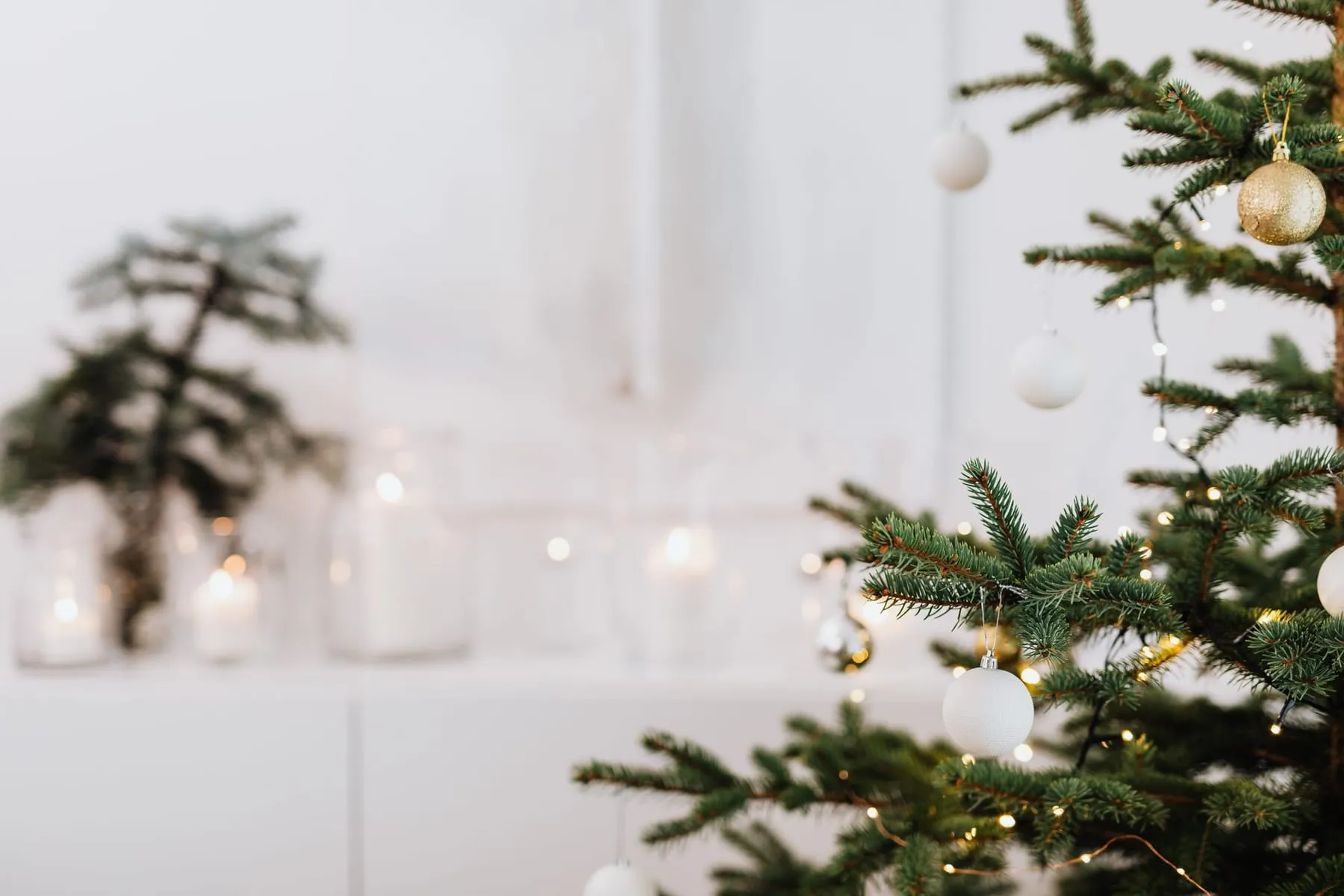
Plug-in LED string lights in warm white are the best choice for most UK homes. They give a soft, golden glow that suits the deep green of a real fir, they barely warm up, and they cost very little to run.
Look for a set with a low-voltage transformer (the box on the cable between the plug and the lights), a green or clear cable to match your tree, and a lead long enough to reach your socket without an extension. A control box with a steady setting is useful too, because many sets default to flashing modes that can grow tiring by mid December.
If you want a fuller, twinkling look, cluster lights (hundreds of tiny bulbs packed on a short length of cable) are popular and wrap neatly around a tree.
LED or traditional filament lights?
LED lights are better than traditional filament bulbs on almost every count. They use far less electricity (roughly 80 to 90 per cent less), last much longer and stay cool to the touch, which matters on a real tree that slowly dries out over the season.
UK electrical safety advice recommends LEDs over filament lights for exactly these reasons: extra-low voltage sets lower the risk of shocks, and low heat lowers the risk of burns and fire.
The one thing old filament bulbs did well was colour: a deep, honeyed glow. Early LEDs looked harsh by comparison, but modern warm white LEDs come very close. If you still have a box of old filament lights, check them carefully and consider retiring them. Lights stored for a year can develop faults, and spare bulbs for old sets are hard to find.
What do LED tree lights cost to run?
Very little. A typical indoor LED tree set draws only a few watts, so running it for an evening usually costs pennies at current UK electricity prices. Filament sets can use many times more.
Warm white, cool white or multicoloured lights?
Warm white is the classic choice and the safest bet with a real tree. It looks cosy, flatters gold and red decorations, and makes the needles look rich rather than grey.
Here is how the main options compare:
| Colour | Look | Works well with |
|---|---|---|
| Warm white | Soft, golden, traditional | Gold, red, natural and rustic themes |
| Cool white | Crisp, icy, modern | Silver, white and blue schemes |
| Multicoloured | Cheerful, retro, playful | Family trees, mixed baubles, children |
| Dual colour | Switches between warm and multi | Households that cannot agree |
Cool white can look striking with a silver scheme, but on a green tree it sometimes reads as clinical. Multicoloured lights are having a comeback and suit a tree full of handmade and inherited decorations. If you plan your Christmas tree decorating around a colour scheme, pick the lights first, as they set the mood for everything else.
How many Christmas tree lights do you need?
A common rule of thumb is about 100 bulbs per foot of tree height for a well-lit tree, and more if you like a really bright, dense look. Bushy varieties need more lights than slim ones because there is more depth to fill.
| Tree height | Bulbs for a gentle glow | Bulbs for a bright, full look |
|---|---|---|
| 4 ft | 300 to 400 | 500 to 700 |
| 5 ft | 400 to 500 | 700 to 900 |
| 6 ft | 500 to 600 | 900 to 1,200 |
| 7 ft | 600 to 700 | 1,100 to 1,500 |
| 8 ft | 700 to 800 | 1,300 to 1,800 |
Check the lit length as well as the bulb count. A 6 ft tree usually needs somewhere around 20 to 30 metres of lit cable once you weave it in and out of the branches, so a short set with lots of bulbs can still fall short. If in doubt, buy one more set from the same range than you think you need. A wide Nordmann fir, one of the Christmas trees that don’t drop needles, soaks up lights much faster than a narrow Fraser fir.
Plug-in, battery or smart lights?
Mains plug-in lights are the most reliable choice for a full-sized tree. They give steady brightness all season and you never have to change batteries. Battery lights suit small trees, wreaths, garlands and spots far from a socket, but they dim as batteries run down and are rarely bright enough for a big tree.
Smart lights that you control from a phone app are worth considering if you enjoy effects, timers or colour changes. Some let you map patterns across the tree. They cost more, so make sure the basic quality (cable, plug, warm colour) is good before paying for features.
Whatever you choose, a simple plug-in timer is one of the most useful extras. It switches the tree on as it gets dark and off at bedtime, which saves electricity and means you never forget.

What to check for safety before you buy
Buy from a reputable UK retailer and check the set carries a UKCA or CE mark and a UK three-pin plug. Very cheap sets sold through online marketplaces are a known source of unsafe electrical goods, so be cautious with unbranded lights at prices that look too good to be true.
Before you buy, check:
- Indoor or outdoor rating. Only use lights outdoors if they are made for it (look for an IP44 rating or higher), and keep plugs and transformers indoors.
- A transformer. Low-voltage sets with a separate transformer are safer than sets that run at mains voltage along the string.
- Connectable sets. Only link sets that are designed to connect, from the same range.
- Replacement parts. Some sets let you replace a failed bulb or fuse. Never try to repair a damaged cable yourself.
When the lights arrive, unpack and test them before they go on the tree. Then follow our guide on how to put lights on a Christmas tree so they sit deep in the branches rather than on the surface.
Do real trees need different lights?
A real tree does not need special lights, but it makes the case for LEDs even stronger. A cut tree slowly loses moisture over the weeks, so lights that run cool are the sensible choice. Keep the stand topped up with water every day, which is the single best thing you can do to keep your Christmas tree alive and safe.
Real trees also have stronger, more open branches than most artificial ones, so they hold lights well and give them more depth. A Nordmann or Fraser fir with lights tucked towards the trunk glows from inside in a way a flat artificial tree rarely matches.
If you have a cat, choose lights with sturdy cable and keep the lowest loops tucked in. Our guide on keeping cats away from the Christmas tree has more ideas.
Still need the tree itself? Search for a Christmas tree farm near you and pick one with a good shape for lighting: full, even branches all the way round.
Questions people ask
Are LED Christmas lights safe on a real tree?
Yes. LEDs give off very little heat, so they are the safest choice for a real tree. Keep the stand topped up with water so the branches stay moist, and switch the lights off when you go out or go to bed.
Can I leave Christmas tree lights on all night?
It is best not to. Safety advice in the UK is to switch off and unplug decorative lights before bed and when you leave the house. A plug-in timer makes this easy.
Why do some LED lights flicker?
Some cheaper sets flicker because of the way their power supply works, and a few are designed to twinkle on purpose. If steady light matters to you, check that the set is described as static or non-flickering, and avoid sets with obvious build faults.
Can I connect two sets of tree lights together?
Only if they are sold as connectable and come from the same range, joined in the way the instructions describe. Never join different sets together or improvise with adaptors.
How long do LED Christmas lights last?
Good LED sets usually last many seasons, often far longer than filament bulbs. The weak points tend to be the wiring, plug and transformer, so store them carefully and check them each year.